Are You Using AI Responsibly?
The AI landscape continues to evolve, and we’re admittedly just scratching the surface as not only does it’s capabilities expand, but we learn more about what it can do. It’s a powerful tool, and with that power comes a level of responsibility and understanding of what it’s great for, and where it would be important to proceed with caution.
Let’s start with what it’s very good at – analyzing data, and automating SOME processes. If you have a lot of data you want to analyze, AI can save you countless hours and is far more powerful than a spreadsheet. No need to write complicated queries, AI can do that in a heartbeat. Automating processes – ie, taking information from one platform, translating and connecting to another platform, monitoring the data as it flows and making decisions on what to do as a result of that data according to criteria you’ve established, yep, AI does that for breakfast. More lately, it’s being used to assist researchers to explore new potential drug compounds to treat diseases.
For the business owner, AI has the potential to streamline workflows, reducing costs and freeing up time for people to work on less repetitive tasks where human expertise is required.
Lately, however, we’re starting to see AI being used in areas that might be cause for concern – direct customer interaction and creativity. Let’s start with the first – customer interaction. This started a while ago with the introduction of knowledge bases as part of customer support – type in your problem and either the chat bot or the website will search for already documented solutions for those issues. And those evolved and now incorporate AI so that more and issues can be handled without human intervention. Same is true for simply scheduling an appointment with a service provider – some of those interactions really don’t need human intervention. But some do and that’s where AI can actually become a negative – the frustrated customer who has a particular issue that the AI can’t handle/hasn’t experience with. And as a business owner, do you want an AI bot making sales calls? Sorry, I’d hang up the phone (and do) vs. talking to someone. Or may have my AI bot talk to yours? Yeah, no.
Using AI for creative tasks however is another potential issue entirely – and here’s where I think it’s important that we think about AI as a tool, not a solution. I’m certain that if I asked AI to write this article, it wouldn’t sound like me or my voice - and while you could argue it could do a better job, that’s not the point. The point is this is my article, my voice, my thinking – not AI’s. I also find that while I’m writing, other ideas/concepts come to mind which often lead me to more thinking.
To be clear, sometimes asking AI to write an article can give you a start, provide you with ideas you haven’t considered, and could be a very useful data point for generating content. BUT, simply copying it or changing a few words and using that as your work? Not sure that’s what you want to be doing – unless of course your content sounds like AI to start with.
Same is true when it comes to images/photographs – the AI tools in editing tools such as Photoshop and others are incredible and have saved me a lot of time for certain projects/edits – moving that shirt collar from outside the jacket to underneath took me far less time (and likely looked better) vs. a pure manual edit.
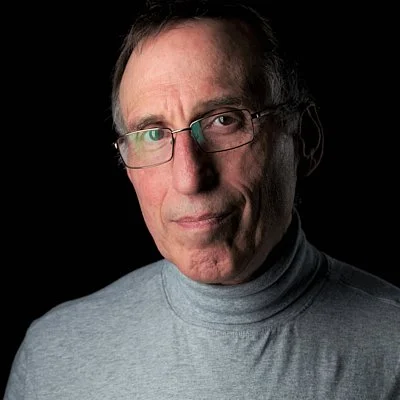
But taking that recent photo someone took of you and asking AI to create a professional looking headshot? Sorry, I’ve yet to see one that looks real. And do you really want to put something out there of yourself that is disingenuous, particularly when it comes to business/career where trust is paramount just to save $$$?
Here’s the bottom line – remember whatever content you create and deliver, YOUR name is associated with it, not the AI’s. It’s your brand, your reputation, your business, your career.