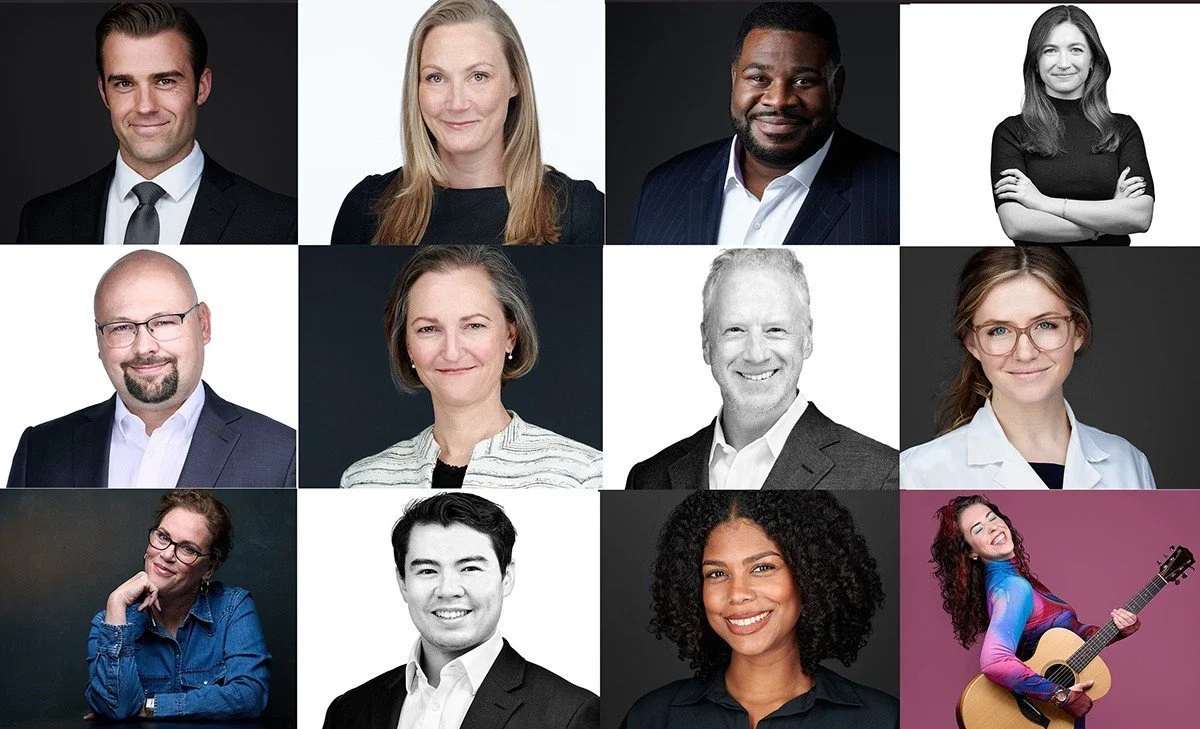
Does your LinkedIn profile image really look like you?
Your skin isn’t perfect, and you shouldn’t want it to be. If you’re blessed with great looking skin, congratulations and thank your parents, but most people don’t have perfect skin – and you shouldn’t want it to look that way in your headshot.
There are a growing number of AI based tools for both photographers and non-photographers promising anything from taking any old photograph and turning it into a great looking headshot, to one button retouching. The problem is with both approaches the results look over retouched at best, or just not real.
One of the biggest culprits of this approach is overdone skin smoothing – smoothing out all those bumps, crevices, light and dark areas to make the skin look smooth. The funny part here is that professional photographers spend many thousands of dollars on cameras and lenses with ever increasing sharpness and resolution to capture as much detail as possible, and then apply use AI retouch to take away much of that detail.
And it’s not really what people/businesses necessarily want – I was recently contacted by a law firm who was looking for a new headshot photographer because most of the attorney’s felt their headshots were over retouched and didn’t look real; their skin looked plastic.
So why do photographers over retouch? First, many I know think that’s what their clients want, and to be fair, some do. But, like that law firm, clients are starting to push back valuing authenticity. However the primary reason photographers over retouch is they are using AI based batch processing retouching tools, that reduce the amount of time they spend retouching their images. Let’s say you’ve shot 50 people – if retouching each image takes an average of 10 minutes, that’s at least a full days work of retouching – sitting in front of your computer, assessing each image, looking for areas that need adjustments, and making those adjustments. In their minds, that’s a day they could have been shooting, generating additional revenue – and they don’t enjoy it. So they either outsource the retouching to (mostly) offshore businesses that will do it for very little cost, or more recently use AI based tools that will retouch the entire batch of photos, sometimes while the shoot is progressing. Note that it wouldn’t be surprising to learn those outsourced retouching businesses are using the same AI based tools some photographers use.
So how do you insure you get images that really look like real people? Talk to your photographer about their process, what you’re looking for, examine their work closely, and make sure you’re both on the same page in terms of both the session itself, the look you’re going for, and the amount of post processing. Check to insure you can see the images during the session (and before you leave!) – that way you can get a good idea of whether or not there are images you like. Ideally, the photographer is showing them to you as you go along, so you can make adjustments, but not every photographer uses that workflow. I’ve been using that process since day 1, and it is truly a game changer.